
PROJECT

ConocoPhillips

8-29 Well Pad and Access Road Construction

Project Details

CONSTRUCTION PARTNER

ConocoPhillips Canada

CONTRACTOR

Halfway River Frost LP

LOCATION

Wonowon, British Columbia

CONTRACT

8-29-88-24 W6M Well pad & Access Road Construction

DURATION

2024

Key Project Highlights

110,940 M²

Well Pad Area

299,000 MÂł

Right-of-Way Clearing

3 KM

Access Road Constructed

278 LM

600 mm CSP Culvert Installed

75

Employees & Subcontractors at Peak

Project Overview

Halfway River Frost LP delivered the construction of a new well pad and approximately three kilometres of access road for ConocoPhillips Canada near Wonowon, British Columbia. 

The project encompassed the full site-development cycle, beginning with winter logging and clearing and progressing through grubbing, topsoil stripping, large-scale earthworks, road construction, drainage installation, aggregate placement, survey and machine-controlled grading, quality verification, and interim reclamation. 

HRFL coordinated forestry crews, heavy civil equipment, survey and quality-control personnel, mechanical support, and project-management resources to deliver the work through changing ground and seasonal conditions.

The project included a broad range of forestry, earthworks, road construction, drainage, aggregate, quality-control, and reclamation activities. 

Site Preparation & Forestry
  • Logging and clearing of approximately 20.4 hectares 
  • Merchantable timber processing and hauling to Fort St. John sawmills 
  • Grubbing and removal of stumps and roots 
  • Topsoil stripping, loading, hauling, and stockpiling 
  • Survey and construction layout 
Well Pad & Access-Road Construction
  • Large-scale common cut and fill operations 
  • Subgrade preparation and unsuitable soil replacement where required 
  • Material moisture conditioning and controlled lift placement 
  • Machine-controlled excavation and grading 
  • Compaction and density testing 
  • Approximately 3 km of new access-road construction 
  • Culvert and drainage installation 
  • Aggregate placement, compaction, and final grading 
  • Road signage and site finishing 
  • Interim reclamation of disturbed and exposed areas 

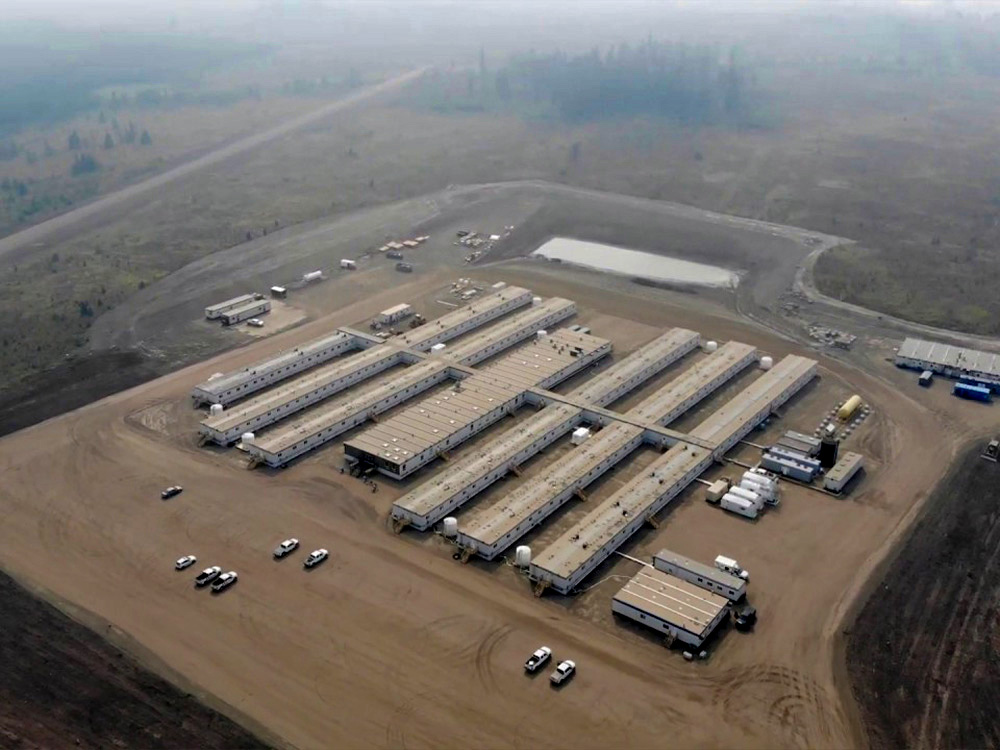
The well pad required substantial earthworks to establish engineered grades and provide a stable operating surface for subsequent ConocoPhillips activities. 

Approximately 115,000 m³ of common cut was excavated from the pad using Topcon-equipped John Deere 470 excavators and loaded into 40-ton articulated rock trucks for placement within designated east and west fill areas. 

Approximately 114,000 m³ of common fill was placed and spread using six-way machine-control dozers. Material was placed in approximately 300 mm lifts, moisture conditioned as required, and compacted using padfoot rollers before being finished with an 84-inch smooth-drum roller. 

The completed well pad covers approximately 110,940 m², providing a large engineered surface for subsequent operations.

HRFL constructed approximately three kilometres of new access road connecting the well pad to the existing road network. 

Road earthworks included approximately: 

  • 38,000 mÂł of common cut 
  • 32,000 mÂł of common fill 
  • 15 culvert installations 
  • 278 lineal metres of 600 mm CSP culvert 
  • Approximately 8 m finished running surface 

Weak or unsuitable soils were removed where required and replaced with competent material prior to final aggregate construction. Drainage, culvert installation, aggregate placement, compaction, and final grading were completed to provide reliable heavy-equipment access.

Following completion of the engineered subgrade, HRFL placed and compacted approximately 30,775 tonnes of 25 mm gravel and 10,590 tonnes of 80 mm gravel. 

In total, approximately 41,365 tonnes of aggregate was placed and compacted across the well pad and access-road works. Final surfaces were graded and compacted to provide durable access and operating areas capable of supporting heavy equipment and ongoing industrial traffic. 

Survey, machine control, and quality verification were integrated throughout project execution. 

Topcon-equipped excavators and six-way dozers were used to support accurate excavation, material placement, and final grading. Field survey personnel provided construction layout and grade verification throughout the work. 

Fill was placed in approximately 300 mm lifts, moisture conditioned, and compacted to the required density. Density testing was completed throughout construction to verify fill performance prior to subsequent lifts and final aggregate placement. 

This combination of machine-guided equipment, field survey, compaction control, and quality testing supported consistent grades and reliable finished surfaces across both the well pad and access road. 

Environmental planning was incorporated into the project from the initial clearing phase. 

Logging and harvesting were completed during the preceding winter season to reduce conflict with the bird-nesting period before civil construction commenced. 

Approximately 20.4 hectares of the wellsite and road-access area were cleared, with merchantable timber hauled to Fort St. John sawmills. 

As earthworks were completed, HRFL carried out interim reclamation of disturbed areas. Salvaged topsoil and surface materials were replaced across exposed cut and fill slopes, together with large woody debris where required, to stabilize disturbed soils and prepare the site for longer-term reclamation.

The project was delivered through Halfway River Frost LP, supporting economic participation, employment, and capacity-building opportunities associated with Halfway River First Nation. 

HRFL combined local and Indigenous participation with Frost Group’s forestry, heavy civil construction, equipment, project management, survey, safety, and quality-control capabilities to deliver the project.

The ConocoPhillips 8-29 Well Pad & Access Road project demonstrates Halfway River Frost LP’s ability to deliver a complete greenfield site-development package. 

From approximately 20.4 hectares of logging and clearing through nearly 300,000 m³ of combined cut-and-fill earthworks, three kilometres of access-road construction, drainage installation, more than 41,000 tonnes of aggregate placement, machine-controlled grading, quality verification, and interim reclamation, HRFL managed the project through the full civil construction cycle. 

The project reflects Frost’s ability to combine forestry expertise, large-scale earthworks, modern equipment, survey and quality-control systems, and experienced field leadership to deliver complex energy infrastructure projects throughout northeastern British Columbia.